

When Music Becomes the Bridge
- Ashley Franke

- 23 hours ago
- 3 min read
A story about disability, performance, and why accessibility should include the artists, too
For many people, music is entertainment.
For others, it's comfort, connection, or a way to make sense of the world.
For Darnell Paul, music became all those things.
Born four months early, Darnell faced serious medical and developmental challenges from the very beginning. His early years were filled with doctor visits, therapies, and situations that could easily become overwhelming. According to his mother, the world often felt chaotic to him, and music quickly became one of the few things that helped him stay grounded.
When he was younger, he would listen to music through headphones whenever he went out in public. At first, it was calming music, then eventually children’s songs, especially The Wiggles, which played almost nonstop for a period. What started as a coping tool slowly turned into something much more meaningful.
Surprisingly, Darnell didn’t show strong musical ability at first. It wasn’t until his teenage years, after spending time experimenting with a keyboard, that he began to figure out songs by ear. In the beginning, he could only play small parts of melodies, but he kept practicing. Over time, those small pieces became full songs, learned entirely without reading music.
Music gave him something that many other parts of life could not.
It gave him confidence.
His mother, Schelly Paul, explains that Darnell understands that some things are harder for him than they are for other people. He knows he doesn’t always learn at the same pace as his peers. But when he plays, those differences seem to disappear. Music puts him on equal ground with everyone else.

Because Darnell plays strictly by ear, performing in traditional venues can be difficult. Loud environments make it hard for him to hear the song in his head, and his sensory processing disorder can make busy, unpredictable settings overwhelming. If too much is happening around him, he may freeze and lose his place in the song.
That doesn’t mean he can’t perform.
It just means the environment has to work differently.
One of the places where Darnell feels most comfortable playing is at a cancer center, where the open atrium allows people to listen from a distance instead of crowding close to the piano. He also performs at fundraisers, retirement facilities, and day centers for adults, where the atmosphere is calmer and more flexible.
These settings give him the space he needs to succeed.
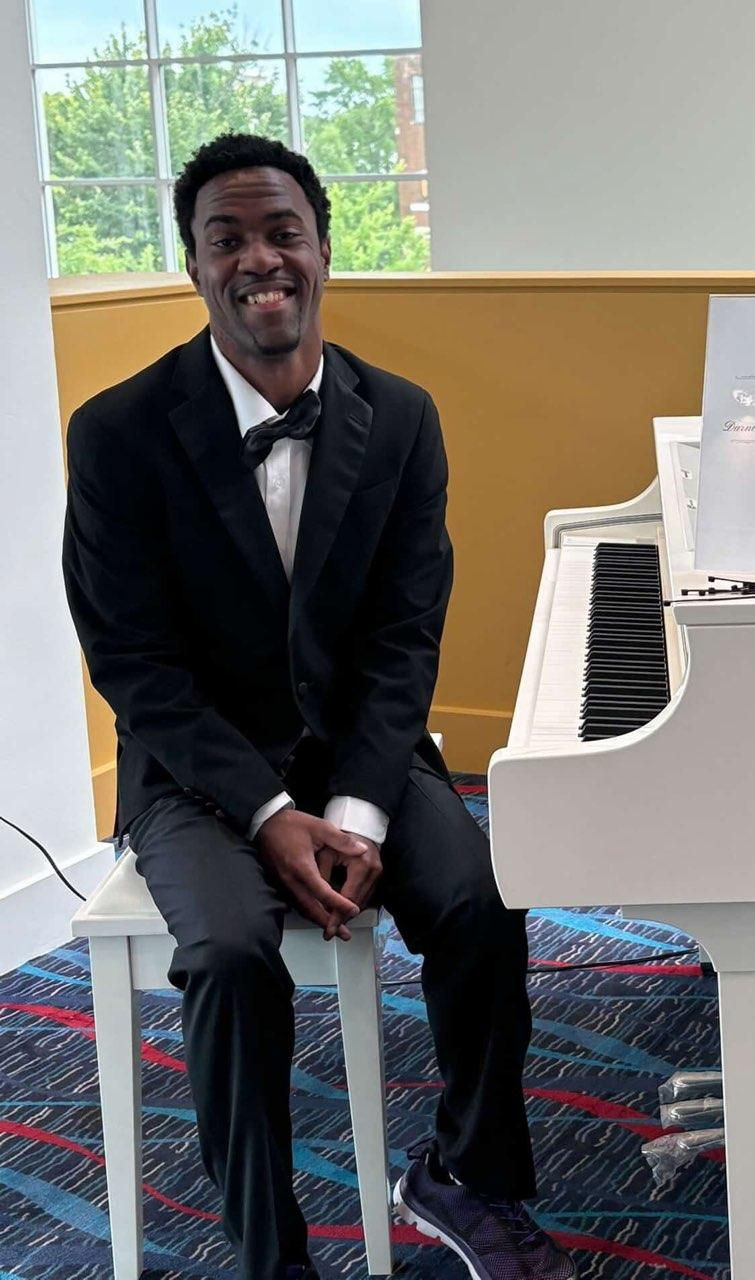
Even so, Schelly says there are not enough opportunities for musicians with disabilities to perform in public spaces. Traditional venues often come with strict expectations, and when there are paying customers, there is less room for the flexibility that some performers need.
That reality led to an idea she wishes more venues would consider
In some parts of the country, venues have hosted nights specifically for musicians with disabilities. These events allow performers to share their talent in an environment where the audience understands that the experience may look a little different. There may be pauses, changes, or moments where things don’t go exactly as planned, but the music is still real, and the talent is still there.
Her message to venue owners is simple.
Musicians with disabilities are just as musical and just as valuable as anyone else, even if their performance style doesn’t match traditional expectations.
For Schelly, watching Darnell perform is about more than the music itself. After everything he has faced medically and developmentally, seeing him share something peaceful and joyful with others means more than words can describe. Helping people through his music has become one of his biggest goals.
His story is a reminder that accessibility in live events shouldn’t stop at the front door
It should include the people on the stage, too.
Because access for every fan should also mean access for every artist.
Follow Darnell’s journey and listen to his music:
You can find Darnell online at the links below, where he continues to share his music and connect with others through his performances.
Comments